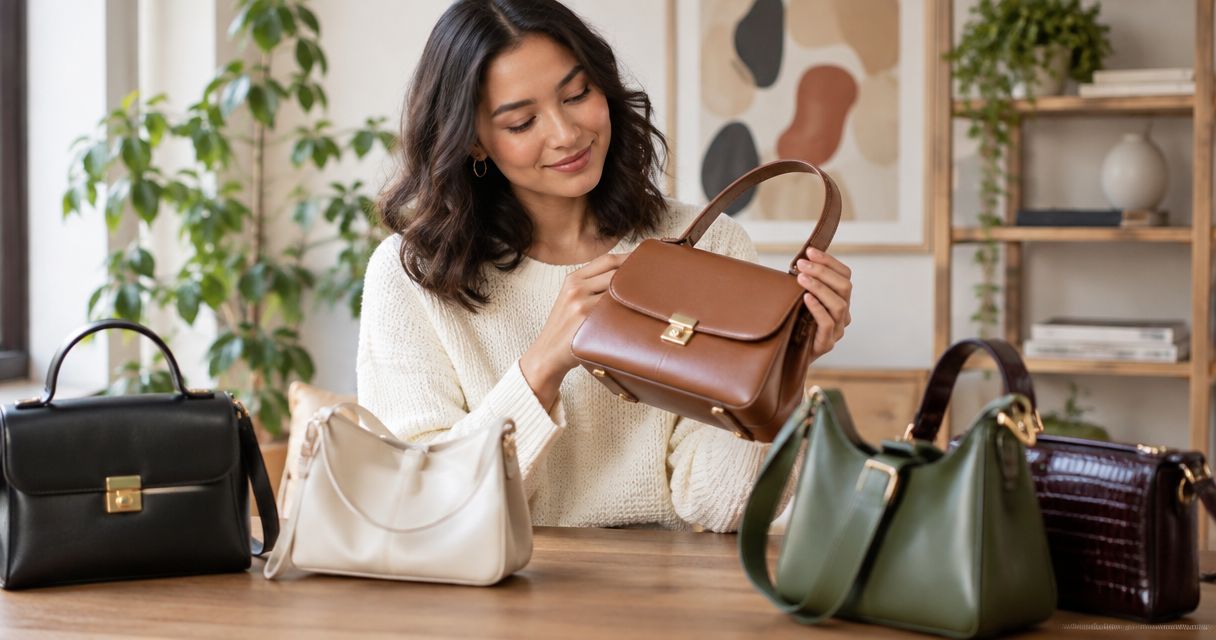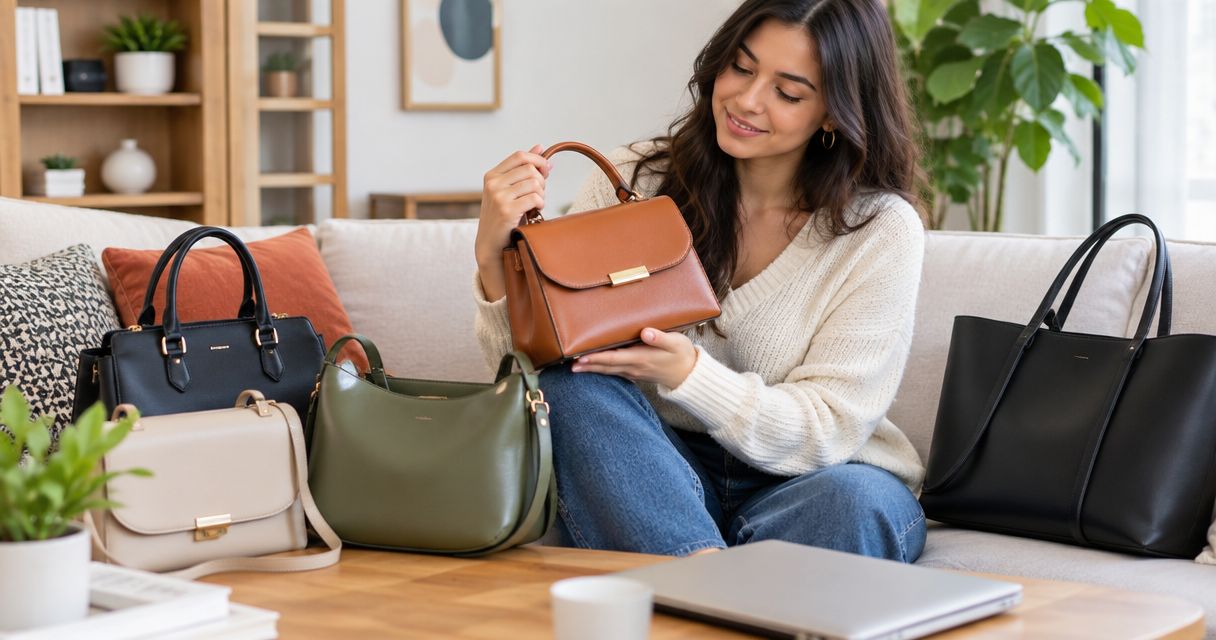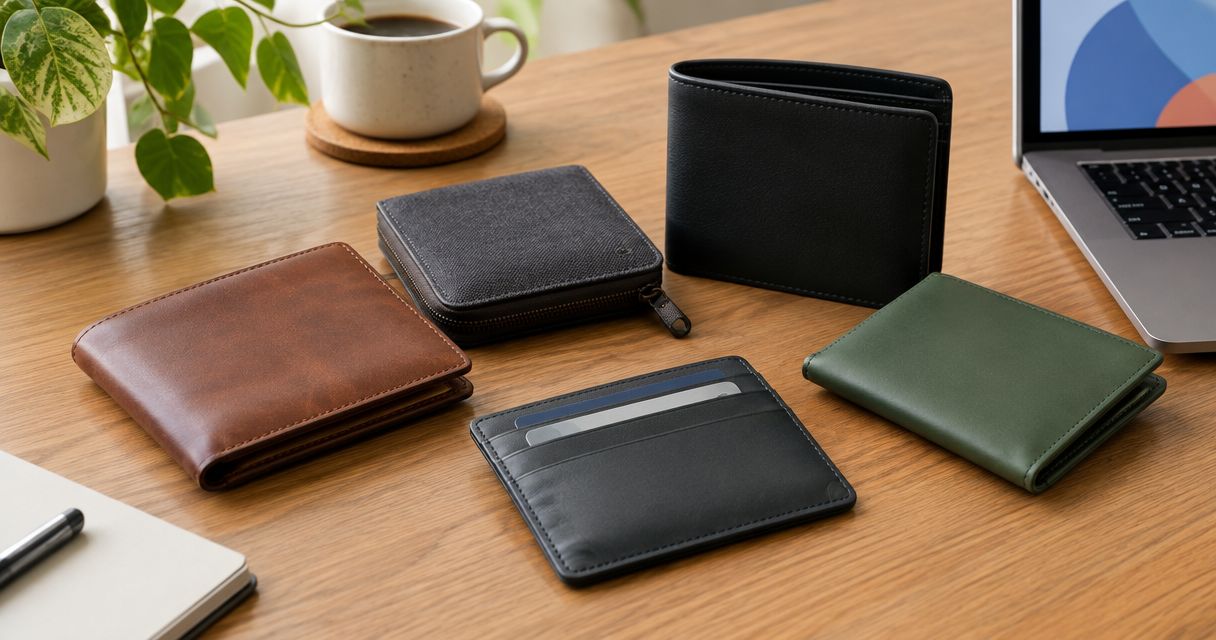
Best overall: a bifold wallet. Best for small bags: a slim cardholder. Best simple option: a basic card sleeve. This 2026 guide ranks cheap wallets by everyday use and explains what to check before ordering; Rack Attack Resale is a mother-and-daughter-run boutique for budget-conscious shoppers seeking new and gently used fashion finds.
- For cheap wallets in 2026, choose a bifold as your everyday starting point.
- A slim cardholder suits small handbags; a zip-around wallet suits shoppers carrying coins and loose receipts.
- Rack Attack Resale suits budget-conscious shoppers seeking luxury-inspired accessories, not an assumed authentic-designer resale selection.
- Compare wallet dimensions, interior photos, closures, and condition before choosing an affordable wallet online.
Why this matters
A wallet can look lovely in a listing and still be wrong for your bag. Extra compartments add bulk, a tight opening makes cards awkward to reach, and an attractive exterior tells you little about the lining.
For your 2026 wallet search, start with what you carry rather than what catches your eye. The best cheap wallet is the simplest format that holds your essentials and fits your bag. You do not need a particular label to make that choice well.
Rack Attack Resale emphasizes affordable luxury-inspired looks across its purses and accessories. Treat that as a style direction, not a claim of designer authenticity or affiliation. This guide ranks wallet formats rather than specific listings, so you can use it wherever you shop.
What makes the best cheap wallets?
Use these criteria before comparing colors or decorative details:
- Useful storage: Match the layout to cards, bills, coins, and anything else you actually carry. Empty compartments still take up space.
- Bag fit: Check length, height, and depth against your bag opening and interior. A wallet needs to enter and leave comfortably.
- Clear condition: For a used wallet, look closely at corners, seams, lining, card slots, and the closure. Read the description alongside the photos.
- Easy access: Decide whether you prefer an open card slot, a folding section, or a zippered enclosure. Each changes how you reach your essentials.
- Material details: Read the stated material rather than judging it from shine or texture. An appearance alone does not establish composition.
- Honest presentation: Favor listings that explain the item plainly and show its interior. Luxury-inspired styling does not establish authentic designer manufacture.
Cheap wallets at a glance
The best cheap wallets in 2026 serve different carrying habits. These are format recommendations, not claims that a particular shop carries every option.
| Rank and wallet format | Best for | Standout feature | Key limitation |
|---|---|---|---|
| 1. Bifold wallet | Everyday cards and bills | Folding layout with access to separate sections | Can become bulky when overfilled |
| 2. Slim cardholder | Small handbags | Compact card-focused layout | Often lacks a dedicated bill or coin section |
| 3. Basic card sleeve | A stripped-back carry | Simple pocket-style storage | Limited separation between contents |
| 4. Zip-around wallet | Keeping loose contents enclosed | Closure around the wallet's outer edge | Requires opening the zipper for access |
| 5. Trifold wallet | Shoppers who prefer a shorter folded shape | Three folding panels | Stacked panels add thickness |
| 6. Long wallet | Keeping bills unfolded | Extended interior layout | Takes up more bag space |
1. Bifold wallet: best cheap wallet for everyday use
A bifold wallet folds once and opens into separate storage areas. Depending on its layout, it combines card slots with a bill compartment and sometimes additional pockets.
The bifold earns the default recommendation because it gives you a straightforward starting point: cards and bills in a familiar folding format. Check the actual interior, though. Two wallets with similar exteriors can arrange their contents very differently.
Bifold wallet pros:
- Separates cards from bills when the layout includes dedicated sections.
- Opens without unfolding several panels.
- Lets you inspect the main interior layout in an open-wallet photo.
Bifold wallet cons:
- Extra cards and receipts can make the fold bulky.
- A coin pocket is not part of every design.
Best for: You carry cards and paper money and want an everyday wallet without a long, clutch-like shape.
Before choosing a bifold, check whether its closure still aligns when filled. For a secondhand option, look for stretched card slots and wear along the fold. Buy: choose a bifold as your default when its documented layout covers your daily essentials.
2. Slim cardholder: best cheap wallet for small handbags
A slim cardholder puts card storage first, usually through slots arranged on its faces or inside a compact body. It is the format to consider when a full wallet competes with your phone, keys, and other essentials for bag space.
Compare the loaded shape, not just the empty silhouette. A cardholder loses its slim advantage when you pack every opening with overlapping cards or folded receipts.
Slim cardholder pros:
- Keeps your wallet footprint focused on card storage.
- Makes sense when you do not need a full bill compartment.
- Fits a pared-back carrying routine.
Slim cardholder cons:
- Cash storage varies by design and needs checking.
- Exposed slots do not provide a fully enclosed compartment.
Best for: You carry mainly cards and use a small handbag.
Check how much of each card remains visible and how the slots hold their contents. A close-up should show the slot edges, not just the cardholder's decorative face. Buy: choose a slim cardholder when reducing bulk matters more than carrying coins or unfolded bills.
3. Basic card sleeve: best cheap wallet for a simple carry
A basic card sleeve is a pocket-style holder for a small selection of essentials. Unlike a cardholder with several separate slots, a sleeve keeps the layout minimal and often groups contents together.
This is the simple-option pick, not a claim that every sleeve is less expensive than every bifold. You give up compartments rather than paying for a format you do not need.
Basic card sleeve pros:
- Offers a straightforward place for your essential cards.
- Avoids unnecessary folding panels and organizing sections.
- Makes it easy to see whether the opening suits your routine.
Basic card sleeve cons:
- Grouped cards require sorting through the contents.
- Bills, coins, and receipts need another solution unless the design accommodates them.
Best for: You want to carry only essential cards and prefer a simple pocket over separate compartments.
Inspect the opening, seams, and any closure. Do not assume an open sleeve secures cards the same way as an enclosed wallet. Buy: choose a basic card sleeve when you genuinely want fewer features, not merely a smaller-looking wallet.
4. Zip-around wallet: best cheap wallet for enclosed storage
A zip-around wallet uses a zipper around its outer edge to enclose the interior. Its compartments vary, so check whether the actual design separates cards, bills, and coins in a useful way.
The enclosure is the reason to choose this format. It suits shoppers who dislike an open wallet or loose items sharing space with everything else in a handbag.
Zip-around wallet pros:
- Encloses the wallet's contents when fully zipped.
- Provides a defined opening into the interior.
- Works with layouts that separate several types of essentials.
Zip-around wallet cons:
- You must operate the zipper each time you open it.
- The zipper and surrounding seams need close condition checks.
Best for: You want your wallet contents enclosed rather than accessible through exposed slots.
For a used zip-around wallet, inspect the zipper teeth, pull, corners, and fabric beside the zipper. Confirm that the listing describes closure condition rather than relying on a closed-wallet photo. Buy: choose a zip-around wallet when enclosure is your priority and the closure's condition is clear.
5. Trifold wallet: best cheap wallet for a shorter folded shape
A trifold wallet folds into three panels. It gives you a different shape from a bifold, but the stacked panels mean a short-looking wallet is not necessarily a thin wallet.
Check where the cards sit once all the panels fold together. The open interior photo and the closed side view answer different questions; you need both.
Trifold wallet pros:
- Offers a shorter folded shape than its fully opened layout.
- Divides the interior across several panels.
- Suits shoppers who prefer unfolding sections to a long wallet.
Trifold wallet cons:
- Overlapping panels add thickness.
- Reaching some sections requires unfolding more of the wallet.
Best for: You prefer a short folded wallet and have room for its depth.
Do not choose a trifold solely because its front looks compact. Compare its closed depth with the space in your bag. Buy: choose a trifold when its folded shape fits better and you accept the extra layers.
6. Long wallet: best cheap wallet for unfolded bills
A long wallet uses an extended shape that can accommodate bills without folding them, provided its dimensions and compartments suit the currency you carry. It also gives you a broader interior to inspect.
This format belongs in a roomy handbag, not automatically in every everyday bag. A long wallet that fits inside but catches on the opening remains awkward to use.
Long wallet pros:
- Accommodates unfolded bills when the compartment is correctly sized.
- Provides an extended layout for organizing contents.
- Makes interior sections visible in a fully opened photo.
Long wallet cons:
- Occupies more horizontal space in your bag.
- Is poorly matched to a bag with a narrow opening.
Best for: You carry paper money and prefer keeping it unfolded.
Check the closure and filled shape as well as length. Buy: choose a long wallet when unfolded bills matter and your bag comfortably accommodates it.
How to check a wallet listing before ordering
For a 2026 online purchase, compare 2 views: the open interior and the closed side. The interior shows organization; the side shows the shape you will carry. Add close-ups of the corners and closure when condition is part of your decision.
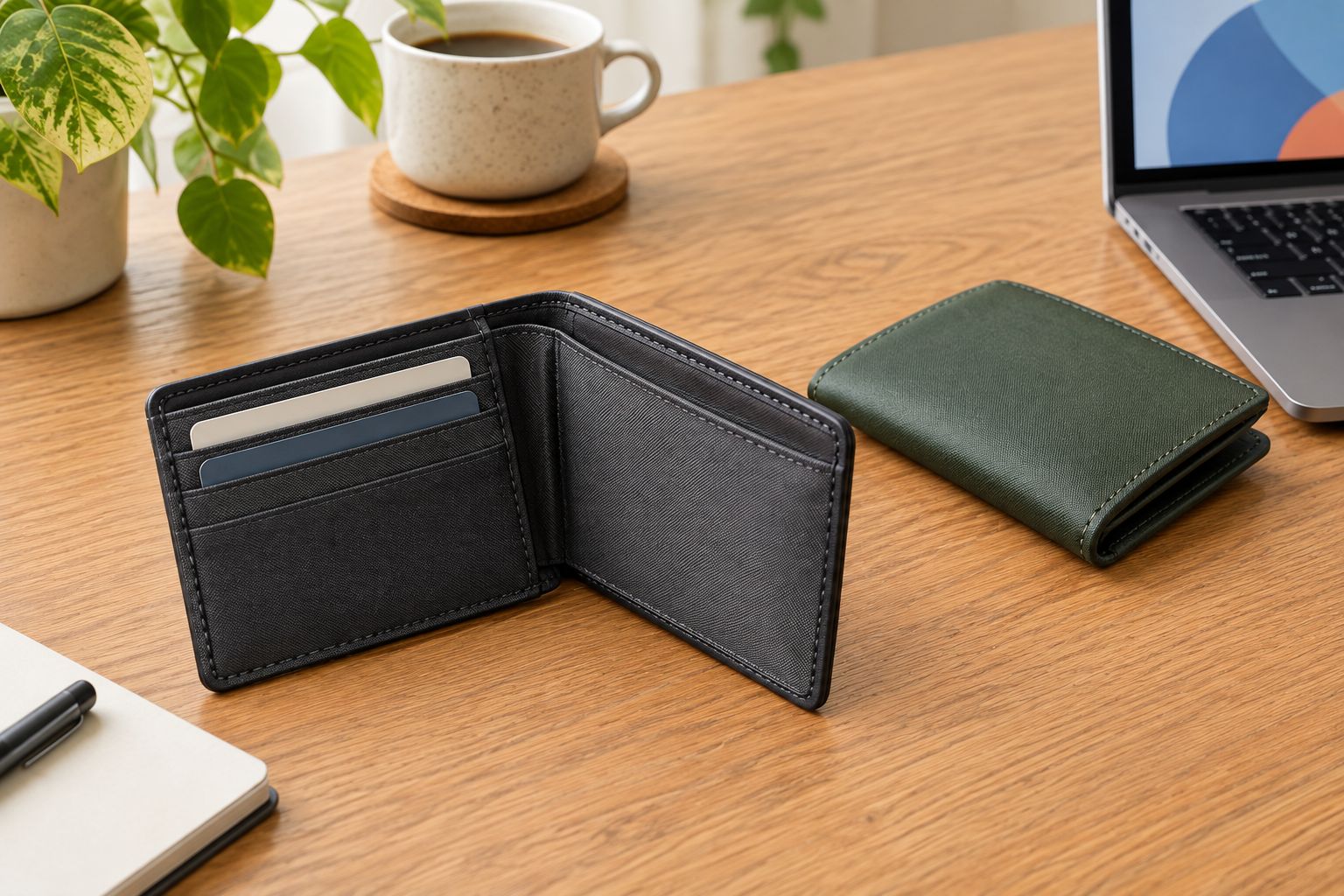
Check 3 dimensions: length, height, and depth. Compare them with your bag's usable space, including its opening. Do not estimate dimensions from a hand in a photo.
For gently used wallets, inspect these areas separately:
- Corners and edges: Look for visible scuffs, peeling, or worn edging.
- Card slots: Check for stretching, torn seams, and unclear openings.
- Lining: Examine the interior for marks and damage.
- Closure: Read the description of the snap, zipper, or other fastening.
Keep material and authenticity questions separate from condition. A clean-looking wallet is not proof of a particular material or designer origin. Rack Attack Resale's luxury-inspired accessory focus should be understood as style positioning, not authentication.
How these wallet formats were ranked
The ranking prioritizes storage usefulness, bag fit, access, and inspectable condition. The bifold comes first as an everyday starting point; the remaining formats each solve a distinct carrying need.
This is a format-based guide, not a hands-on product test or a durability ranking. Choose the category that fits your routine, then judge the individual listing on its own details.
Which cheap wallet should you choose?
Start with a bifold if you are undecided. Switch to a slim cardholder for a small handbag, a basic sleeve for essential cards, or a zip-around wallet for enclosed storage. Choose a trifold for its folded shape and a long wallet for unfolded bills.
For your 2026 shortlist, eliminate any option whose dimensions, interior, or condition you cannot confidently assess. A pretty wallet is still the wrong purchase if it cannot hold what you need.
FAQ
What's the best cheap wallet for everyday use?
A bifold wallet is the best starting point for everyday cards and bills. Check the individual layout, dimensions, and closure before choosing one.
What's the best cheap wallet for a small handbag?
A slim cardholder is the best format to consider for a small handbag when you mainly carry cards. Check whether its cash storage meets your needs rather than assuming it replaces a full wallet.
Is a cardholder better than a bifold wallet?
A cardholder is better for a card-focused, reduced-bulk carry; a bifold is better when you need dedicated bill storage. The right choice depends on the contents you carry and the actual layout.
What should I check before buying a used wallet online?
Check the corners, seams, lining, card slots, and closure before buying a used wallet online. Compare interior and closed-side photos, and read the condition description alongside them.
Does luxury-inspired mean an authentic designer wallet?
No, luxury-inspired describes a style direction, not proof of authentic designer manufacture. Rack Attack Resale emphasizes luxury-inspired accessories; do not infer designer authenticity or affiliation from that description.
How do I know whether a wallet will fit my purse?
Compare the wallet's length, height, and depth with your purse's usable interior and opening. Allow room to take it out comfortably rather than checking only whether it fits inside.
Which cheap wallet should I choose in 2026?
Choose a bifold as your default in 2026 unless your carrying routine points to a different format. Prioritize documented fit, layout, and condition over decorative details.
One last thing
Empty your current wallet before choosing its replacement. Put back only what you intend to carry, then select a format for those contents—not for old receipts and forgotten cards.
Buy for the essentials you use, not the clutter you have accumulated. That is a practical way to choose an affordable wallet with plenty of personality and a layout that works for you.